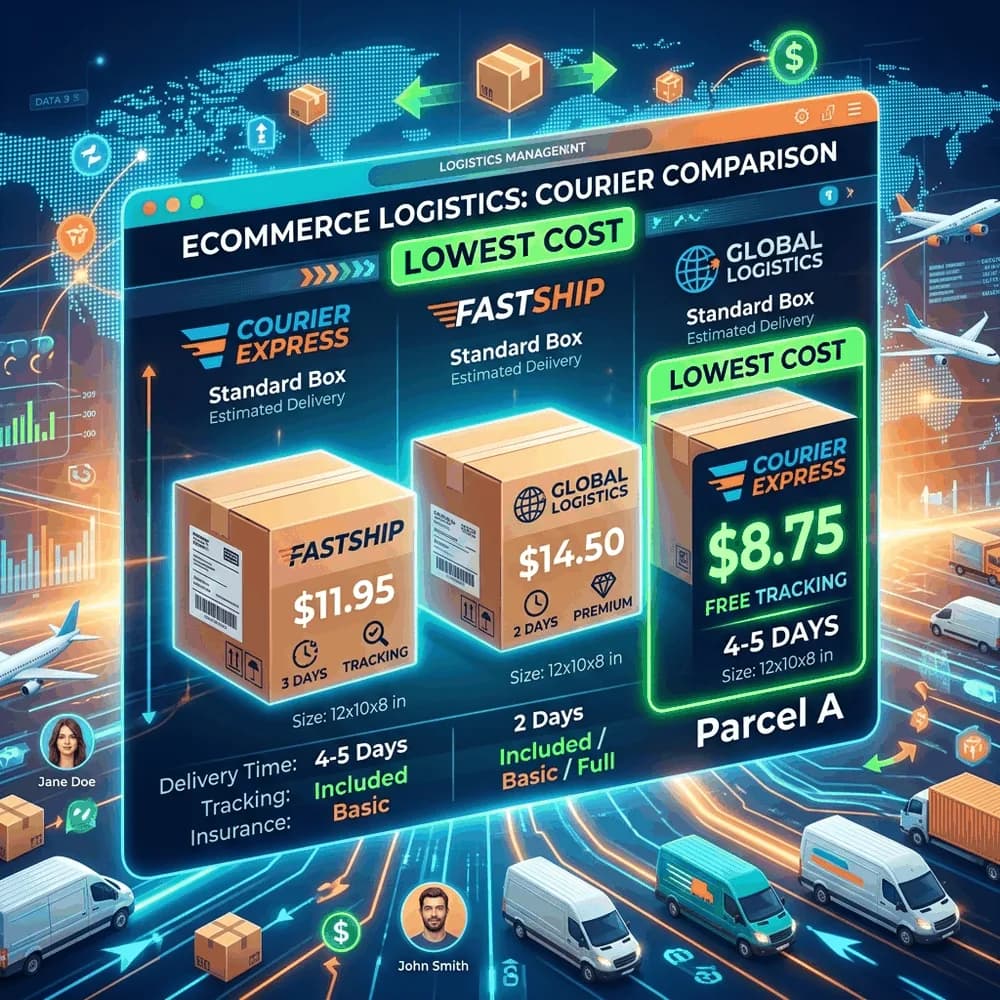


If you run a business that ships physical products—whether you are a D2C brand shipping 500 orders a day or a B2B distributor shipping pallets—you eventually run into a mathematical problem with shipping carriers.
Carrier A is the cheapest for local deliveries. Carrier B is the fastest for national air freight. Carrier C is the only one reliable for rural pincodes. But integrating your website or ERP directly with three different carriers requires custom IT work, managing three different shipping dashboards, and negotiating three different contracts.
Courier aggregator software solves this problem.
The Three Core Functions of an Aggregator
At its core, a courier aggregator acts as a middleware layer between your business and the physical shipping companies (like Blue Dart, Delhivery, FedEx, etc.). It performs three main functions:
- Single API Integration: Instead of your IT team building a custom connection to every carrier's system, you connect once to the aggregator. The aggregator maintains the technical connections to dozens of carriers.
- Smart Carrier Allocation: When an order comes in, the software automatically evaluates it based on rules you set. (e.g., "If package is under 1kg and going to Zone A, use Carrier X. If it is Cash on Delivery, use Carrier Y.")
- Unified Tracking: Instead of checking different carrier websites, your customer service team sees the status of every shipment on one screen, regardless of which company is actually driving the truck.
The Economics: How Aggregators Make Money
Aggregators negotiate massive volume discounts with the carriers because they bring them millions of shipments across thousands of sellers.
If you, as a medium-sized seller, go directly to a carrier, they might quote you ₹50 for a shipment. The aggregator negotiates that rate down to ₹35. They then charge you ₹40.
You save ₹10, the carrier gets volume without having to do sales outreach, and the aggregator keeps ₹5 as their margin. For many businesses, the aggregator is actually cheaper than going direct.
The Hidden Value: NDR and COD Management
While discounted shipping rates are the initial draw, operational teams quickly realize the real value is in handling exceptions.
- NDR (Non-Delivery Reports): When a delivery fails (customer not home, wrong number), it becomes an NDR. Good aggregator software instantly flags this and sends an automated WhatsApp to the customer asking for an alternate time, preventing a costly Return to Origin (RTO).
- COD Reconciliation: In markets like India where Cash on Delivery (COD) is prevalent, reconciling the cash collected by various delivery boys against your bank account is a nightmare. Aggregator software automatically matches successful COD deliveries with the remittance cycles of the carriers, highlighting discrepancies immediately.
When Do You Outgrow an Aggregator?
Aggregators are excellent for small to medium operations. However, very large enterprises (shipping tens of thousands of orders daily) often transition away from aggregators.
At massive scale, a company has enough volume to negotiate their own bottom-tier rates directly with the carriers. At that point, they stop using the aggregator's commercial accounts and instead purchase enterprise shipping software (often called a Multi-Carrier Shipping System) which provides the technology (unified tracking, rule-based routing) but allows the enterprise to use their own direct carrier contracts.