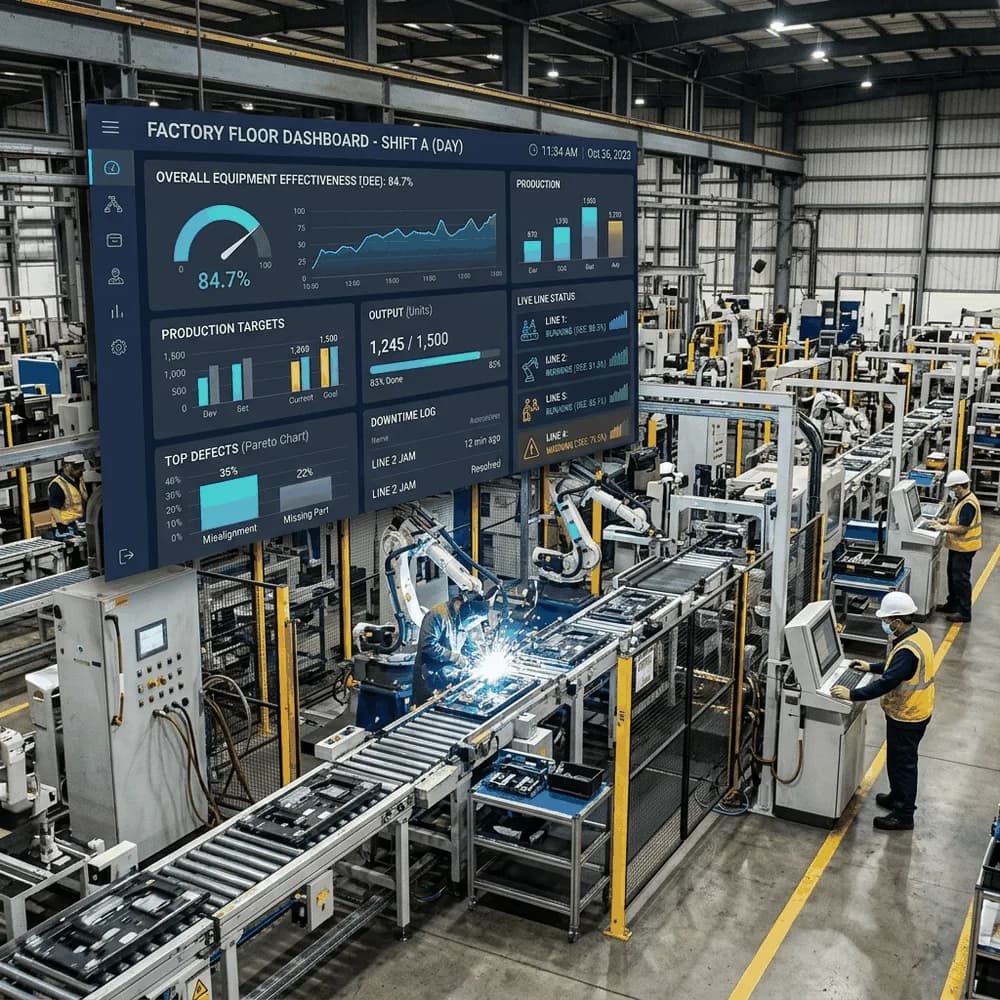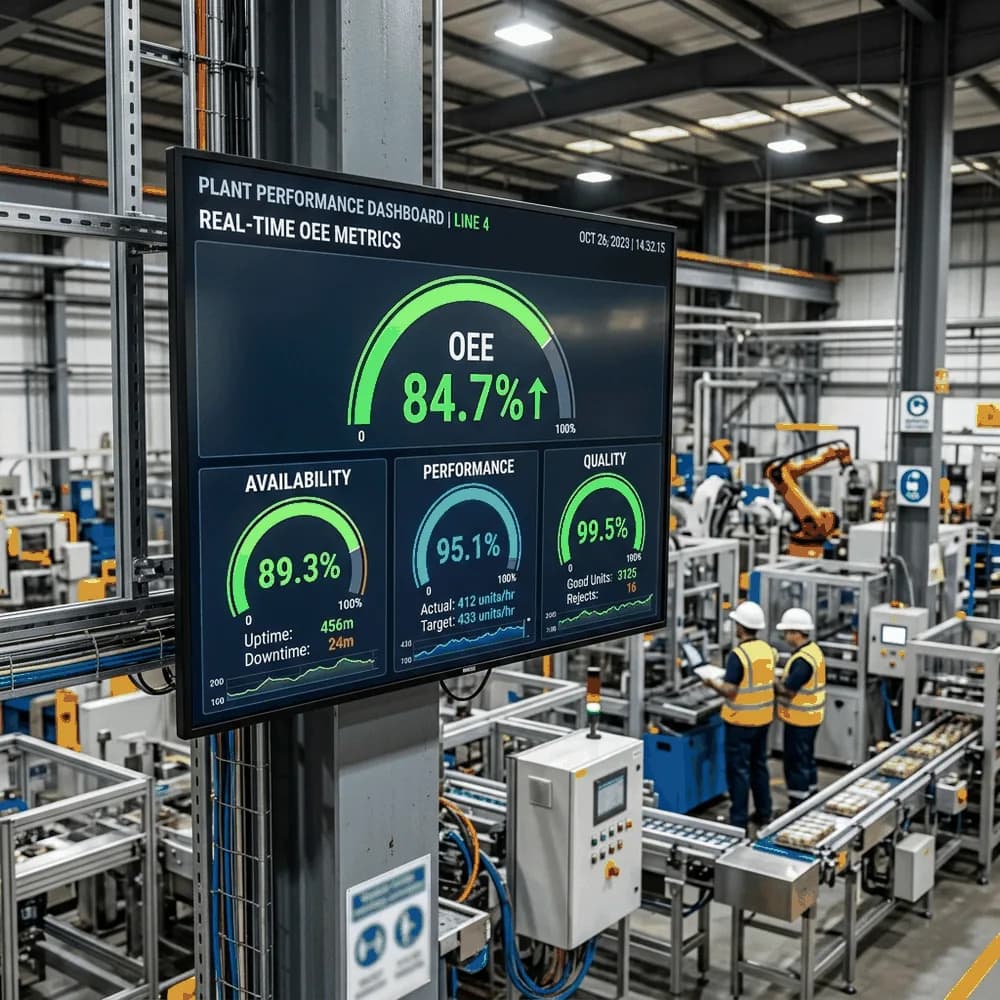


Unplanned downtime is the most visible and most expensive operational loss in manufacturing. It is also the most discussed and least systematically addressed. Most manufacturing businesses have a maintenance programme, a maintenance team, and a general awareness that downtime is too high. What they lack is the data infrastructure to understand why — accurately, specifically, and at the level of detail that enables targeted improvement.
The Two Types of Downtime Reduction
- Reactive downtime reduction: Responding faster when breakdowns occur. Better spare parts availability. Faster maintenance response. Better diagnostic capability. This reduces the duration of downtime events once they start but does not reduce their frequency.
- Proactive downtime reduction: Preventing breakdowns from occurring. This is harder, requires better data, and delivers larger and more sustainable improvements.
Most manufacturing businesses are doing the first. The second is where the 20 to 40% downtime reduction that Micraft MES clients achieve comes from.
Why Most Root Cause Analysis Fails to Produce Improvement
The failure of most RCA processes is not analytical — it is data quality. The RCA team is working with the downtime information that was recorded: "Machine 7 breakdown, 2 hours, mechanical failure." That is not enough to identify the root cause.
Effective root cause analysis requires data captured at the point of the event — the reason recorded by the operator at the moment the machine stopped, combined with the machine's recent performance history, the maintenance history, and the production context. None of this is typically available from a manually compiled downtime log.
The Three Steps to Systematic Downtime Reduction
- Step 1 — Get accurate downtime data with causes at source: Before any improvement programme can be effective, you need to know what is actually causing downtime — what the operator recorded at the moment of the stoppage. This requires an MES or production monitoring system.
- Step 2 — Analyse patterns, not incidents: Individual downtime events are incidents. Downtime patterns are the basis for improvement. Pattern analysis identifies whether the primary failures are random or time-patterned.
- Step 3 — Align maintenance strategy to failure pattern: Different failure modes require different maintenance strategies. Time-based failures require preventive maintenance, while random failures may require predictive maintenance or optimized response time.
Predictive Maintenance — When It Adds Value
Predictive maintenance has received significant attention as an AI application in manufacturing. It is valuable when applied to the right machines with the right failure modes.
Predictive maintenance adds value when: the failure mode produces detectable precursor signals (vibration, temperature, current draw, acoustic emission) before the failure occurs; the machine is high-value or high-impact enough to justify the investment in condition monitoring.
Micraft MES's Predictive Maintenance AI module analyses historical performance data alongside real-time operational parameters to identify patterns that precede failures — on machines where those patterns exist.
The Realistic Timeline for Downtime Improvement
The 20% downtime reduction that Micraft MES implementations achieve is not an immediate result. It is the outcome of accurate measurement, pattern analysis, and targeted intervention over a 4 to 6 month period.