
FAQ
Frequently Asked Questions
Micraft Products, Solutions, Implementation, and Compliance
The questions we are asked most often — across product evaluations, implementation planning, compliance assessments, and day-to-day operations. Answered directly. Linked to relevant pages for those who want to go deeper.

[ MANUFACTURING & MES ]
Manufacturing & MES FAQ
An ERP manages planning — production orders, inventory levels, procurement, and financial data. An MES manages execution — what is actually happening on the production floor right now, machine by machine, operator by operator, work order by work order. Your ERP tells the plant what to make and when. Micraft MES tracks and controls how it gets made in real time. Both are necessary — they solve different problems and the integration between them is what creates a fully connected manufacturing operation.
Standard deployment goes live in 30 to 60 days. This is significantly faster than traditional enterprise MES platforms, which typically require 12 to 18 months. Micraft MES is designed to be configured to your operation — your machine types, your product categories, your quality checkpoints — without requiring a full implementation project every time something needs to change.
Yes. Micraft MES supports discrete manufacturing — tracking individual units, assemblies, and production stages — and process manufacturing — managing batch production, recipes, and compliance documentation. Industry-specific configurations are available for automotive, electronics, pharmaceutical, and general manufacturing.
Five AI modules are included in Micraft MES — not as separate add-ons: Predictive Maintenance (failure pattern recognition before breakdown), Predictive Quality (defect condition identification before defects occur), Real-Time Scheduling Optimisation, Machine Vision Inspection, and Digital Twin Simulations. All are production deployments, not experimental features.
OEE (Overall Equipment Effectiveness) is the product of three factors: Availability (machine running time versus planned time), Performance (actual output rate versus theoretical maximum), and Quality (good parts as a percentage of total parts). Micraft MES calculates OEE continuously from actual production events — machine start/stop times, output counts, and inline quality results — not from manually entered shift summaries. This produces an OEE figure the production team and management can trust because it comes from a single verified source.
Yes. Production orders flow from SAP into Micraft MES automatically. Completions, scrap quantities, and downtime are pushed back to SAP without manual entry. The integration uses SAP's standard IDoc and OData API framework for both S/4HANA and ECC deployments.
Yes. Micraft MES is specifically designed for manufacturing SMEs that need operational depth without enterprise-scale implementation complexity. The 30 to 60 day deployment timeline is achievable for operations of this size. Many Micraft MES clients are mid-size manufacturers who found that enterprise MES platforms were over-engineered and over-priced for their requirement.
[ WAREHOUSE & INVENTORY ]
Warehouse & Inventory FAQ
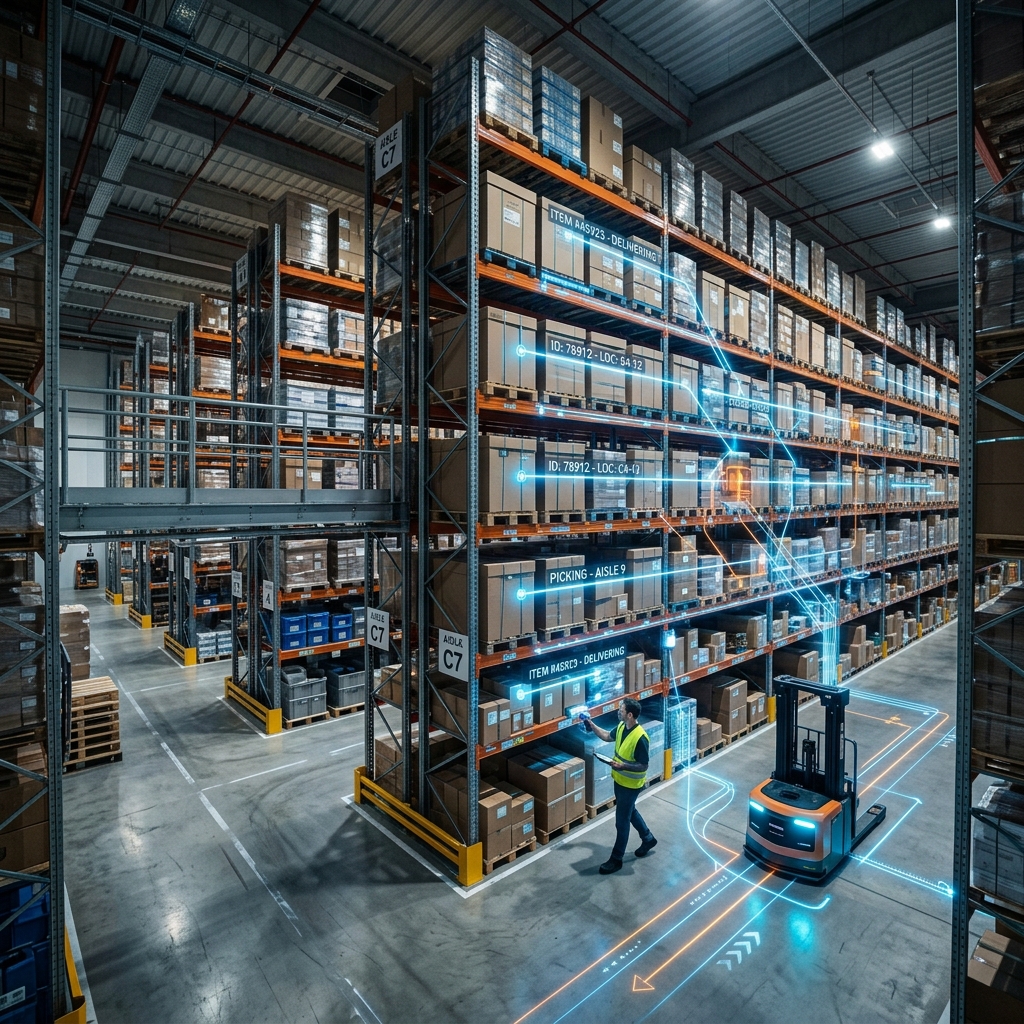
Inventory management software tracks what stock you have and where it is. A WMS manages the physical warehouse operations that move that stock — pick-pack-dispatch workflows, bin and location management, operator task assignment, barcode scanning at every movement. Inventory management tells you what you have. WMS manages how it moves and where it goes. Micraft provides both, and they integrate natively.
Micraft WMS is purpose-built for pharmaceutical and nutraceutical distribution — batch and expiry tracking, FEFO enforcement, GST compliance, and cycle counting within live operations. Client implementations achieve greater than 99% inventory accuracy compared to the 3 to 7% discrepancies common in manual or spreadsheet-managed warehouses.
Yes. First Expiry First Out (FEFO) picking is enforced by the system at the pick instruction level — the operator is directed to the batch with the earliest expiry date that meets the quantity requirement. FEFO compliance is a system property, not a training and vigilance requirement.
Yes. Multiple warehouses, branches, or fulfilment centres managed from a single Micraft WMS instance. Stock at every location visible from one dashboard. Inter-location transfers processed as confirmed digital transactions — both sides updated simultaneously.
Phased rollout with role-based training achieves operational adoption in 2 to 3 weeks. Full implementation timeline depends on data migration volume and integration complexity. The cloud-based deployment with offline mode for scanning operations means critical warehouse functions run uninterrupted from go-live.

[ LOGISTICS & COURIER ]
Logistics & Courier FAQ
Three products for three distinct operational models. Micraft Courier Aggregator is for businesses shipping via multiple courier partners — rate comparison, automated booking, unified tracking, COD reconciliation. Pure CMS is for courier companies managing their own delivery agents and last-mile operations — booking, route optimisation, rider management, digital POD. Mate TMS is for businesses running their own fleet — fleet management, route optimisation, freight cost control, driver management. The right product depends on whether you own the delivery operation (CMS or TMS) or use courier partners (Aggregator).
Delhivery, Bluedart, DTDC, Ecom Express, Shadowfax, Xpressbees, Ekart, FedEx, and DHL. New carrier partners are added as configuration changes — not engineering projects.
Yes. COD amounts tracked per shipment from the moment of delivery confirmation. Carrier remittances matched against expected amounts automatically. Discrepancies flagged in real time. The monthly manual reconciliation exercise across multiple carrier portals is replaced by continuous automated matching.
A Returnable Gate Pass (RGP) tracks materials, tools, or equipment that leave a facility temporarily and must return — tools sent for repair, equipment loaned to a contractor. An NRGP (Non-Returnable Gate Pass) records permanent outward material movements. Both are standard requirements in manufacturing facilities and warehouses. CraftMate manages both as structured digital workflows with full audit trails.
[ CALIBRATION & COMPLIANCE ]
Calibration & Compliance FAQ
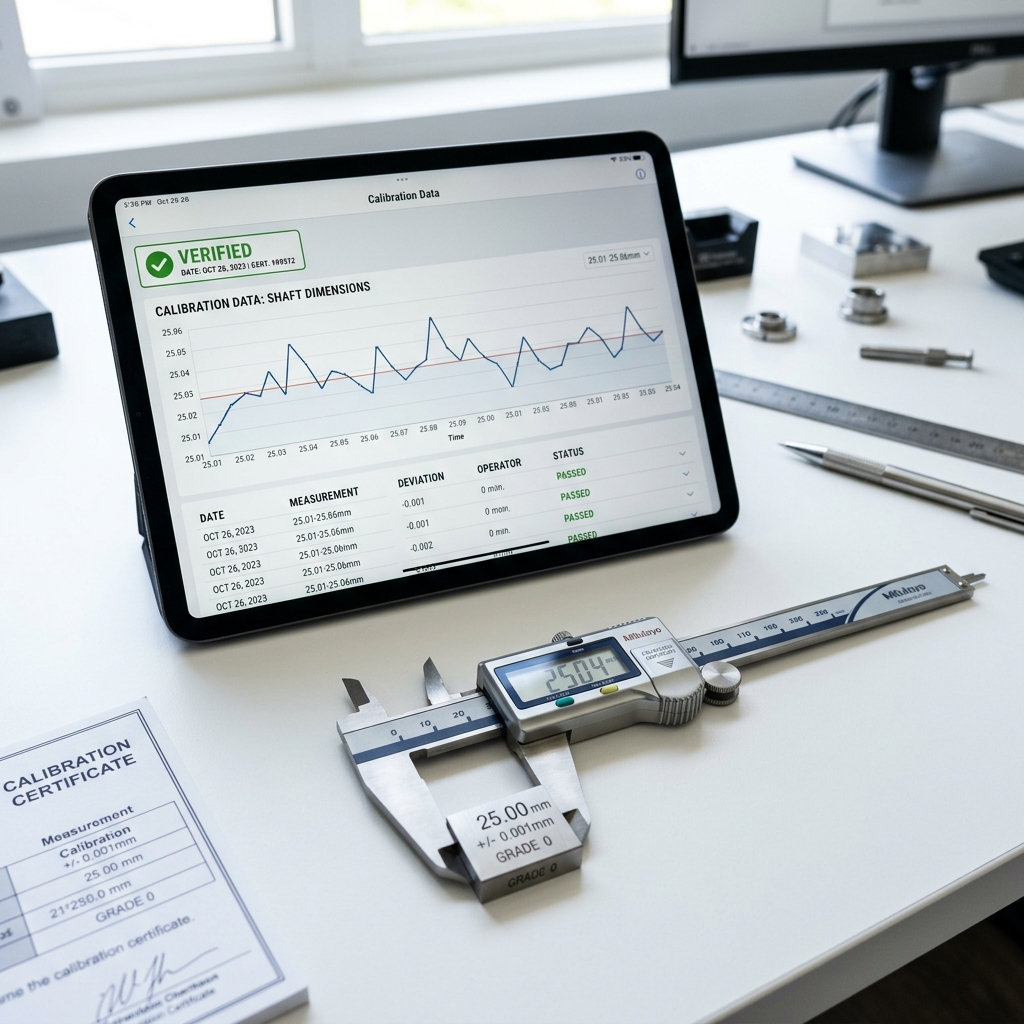
PrecisionCAL is Micraft's cloud-based calibration management platform. The Starter plan is genuinely free — 25 instruments, unlimited users, automated scheduling, and 24/7 support. No credit card required. The Pro plan (up to 500 instruments, MSA/Gage R&R) has a 30-day free trial. Enterprise (unlimited instruments, AI scheduling, multi-site) requires a conversation.
ISO 9001, ISO 17025, IATF 16949 (including MSA and Gage R&R), GMP/cGMP, FDA 21 CFR Part 11, and GAMP 5. The audit trail, electronic signatures, and access controls meet the technical requirements of each standard — built into the platform, not configured as compliance workarounds.
Measurement System Analysis (MSA) is the process of evaluating a measurement system's accuracy and reliability — most commonly through Gage Repeatability and Reproducibility (Gage R&R) studies. It is a requirement under IATF 16949 for automotive suppliers and AIAG's Core Tools framework. PrecisionCAL includes MSA and Gage R&R studies as built-in functionality on the Pro and Enterprise plans — not as a separate tool or spreadsheet calculation.
SharePoint provides document storage and collaboration. A purpose-built DMS like DoxCraft provides enforced version control (the system prevents access to superseded versions), configurable approval workflows with deadline management, FDA 21 CFR Part 11 compliant electronic signatures, tamper-evident audit trails, and automated document lifecycle management. For general business documents, SharePoint is adequate. For regulated manufacturing documents — pharmaceutical SOPs, automotive control plans, PPAP packages — DoxCraft provides the compliance infrastructure SharePoint cannot deliver without extensive custom development.
Yes. DoxCraft offers a professional document digitization service — high-speed scanning at 300 to 400 DPI, OCR with 98%+ accuracy across 14 languages, intelligent indexing, and PDF/A archival format. Pricing is transparent at ₹1.00 to ₹1.40 per page. On-site scanning available for confidential documents that cannot leave your premises.

[ INTEGRATION & TECHNICAL ]
Integration & Technical FAQ
Yes. Micraft's inventory management, WMS, and logistics products integrate with Tally Prime. Stock movements confirmed in Micraft create corresponding entries in Tally automatically — purchase receipts, sales dispatches, and stock adjustments reflected in your accounts without manual entry. GST transaction data and e-invoicing (IRN) integration also supported.
Yes. Orders placed on Shopify flow into Micraft WMS automatically as pick tasks. Inventory levels updated in real time as orders are picked and dispatched. Tracking numbers generated by the Courier Aggregator are pushed back to Shopify orders automatically.
For SAP S/4HANA: REST API via SAP Integration Suite or direct OData service calls. For SAP ECC: IDoc-based integration or RFC calls via middleware. Micraft uses SAP's standard, supported integration frameworks — no unsupported backdoor connections that break with SAP updates.
All three. Micraft MES and the Dispatch Packing System support cloud, on-premise, and hybrid deployment — with active/passive cluster architecture for high-availability production environments. PrecisionCAL is cloud-only. Micraft WMS is cloud-based with an offline mode for scanning operations. The right deployment model is determined by your infrastructure requirements, IT governance policy, and data residency preferences.
Three-level support structure: L1 — first-line operational support (4-hour response for user-impacting issues). L2 — technical investigation (30-minute response for application outage). L3 — engineering team for code-level issues (1-hour response for critical production problems). 24/7 availability for L2 and L3 on production-critical issues.

[ COMPANY & COMMERCIAL ]
Company & Commercial FAQ
19 years. Founded in Pune, headquarters at 603 White Square, Hinjewadi IT Park, Phase I. 3 global offices. 100+ engineers. 500+ clients.
Micraft's 500+ client base includes TATA Group companies, ABB, PAPL, and manufacturers, logistics companies, pharmaceutical distributors, automotive suppliers, and e-commerce brands across India and internationally.
PrecisionCAL has a genuinely free Starter plan (25 instruments, no credit card). The Pro plan has a 30-day free trial. For Micraft MES, WMS, and logistics products, Micraft offers a structured demo built around your specific operational environment — not a free self-service trial, because the implementation configuration required means a guided evaluation is more valuable than unsupported access.
Pricing for Micraft products and services depends on your operational environment, deployment scale, and integration requirements. The right starting point is a demo conversation where we understand your requirement and provide a relevant quote. Contact us at sales@micraft.co.in or call +91 94040 42720.
Yes. The engineers who build and maintain Micraft's product portfolio are the same team that works on client custom development and services engagements. There is no separate "services team" of generalists. Every client engagement benefits from the same domain expertise that produced the product portfolio.
Have a question not answered here?
Our solutions engineering team is ready to answer specific technical, compliance, and integration questions for your operational workflow.